Witnessing One of Nature’s Great Spectacles
Author: Olivia Liu, Program & Communications Director at Upstream Alliance
There are few places on Earth where you can witness a natural event that has been unfolding for more than 450 million years.
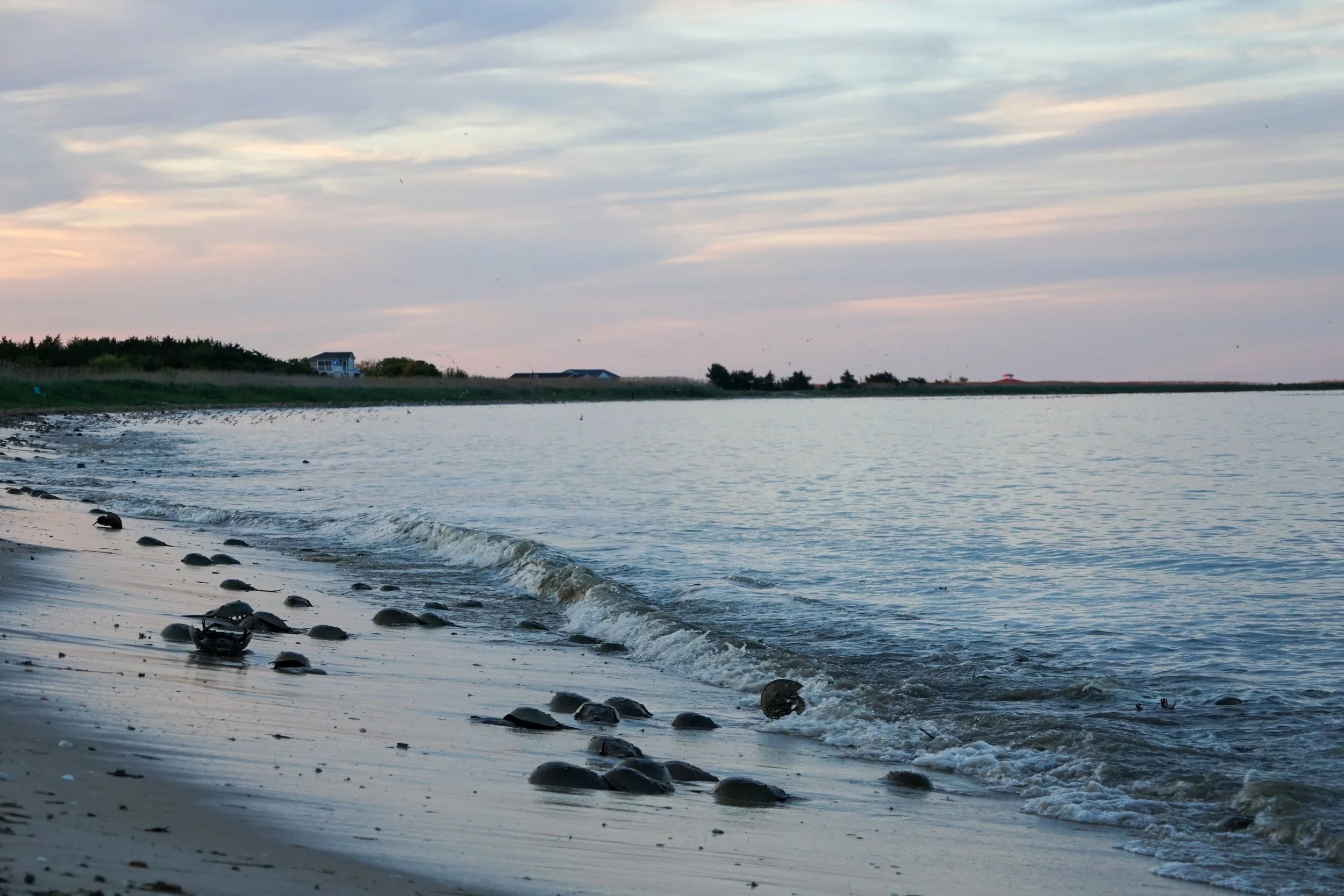
Horseshoe crabs on the beach near Evans Drive at sunset - Photo by Olivia Liu
Every spring/summer along the shores of the Delaware Bay, hundreds of thousands of horseshoe crabs emerge under the stars to spawn. Their arrival sets the stage for one of North America’s most remarkable migrations, as thousands of shorebirds descend on the bay to feast on the nutrient-rich eggs before continuing their journey to breeding grounds as far away as the Arctic.
This May, our UA team welcomed paddlers and explorers for our annual two-day Delaware Bay Expedition - a chance to experience this extraordinary phenomenon firsthand.
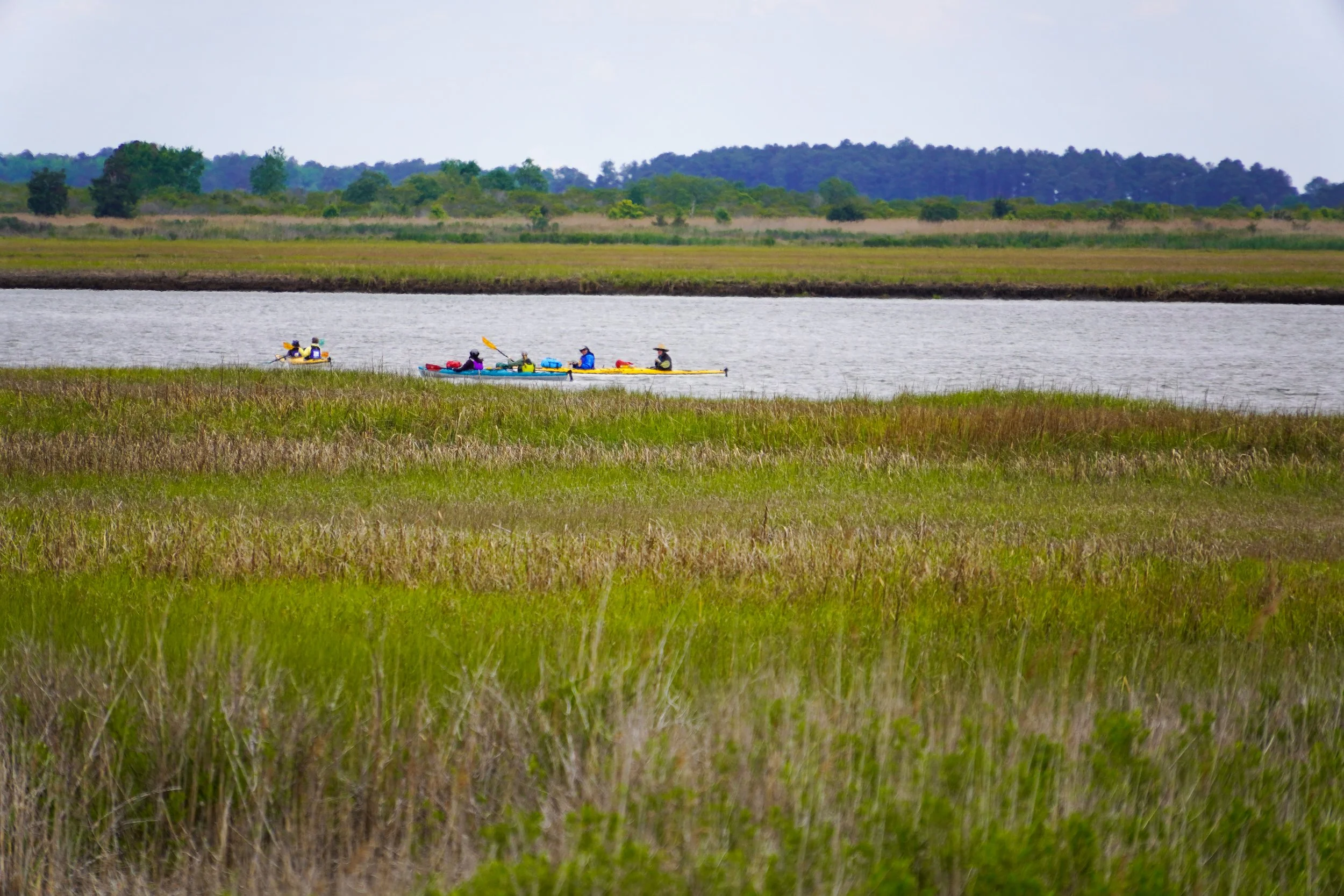
Expedition participants paddling along the Mispillion River - Photo by Janet Harrison
We spent a beautiful, albeit windy, morning paddling the Mispillion River, where its mouth spills into the Delaware Bay. As we kayaked along, red knots and other migratory shorebirds crowded the beaches, filling the air with a lively chorus of calls as they fed along the shoreline. Around lunchtime, we pulled our kayaks into a small, sheltered cove and settled in for a lunch break.
As I reached into my bag for my sandwich, I noticed the lifeless body of a female diamondback terrapin, partially embedded in the muddy bank with the back half of her shell exposed to me. As we sat in the sunshine eating lunch, I found myself wondering how she had ended up there. Had she become trapped? Was she sick? Had she died after laying her eggs? I also wondered whether she had come here to feed on horseshoe crab eggs. I wasn’t even sure if diamondback terrapins eat them, but with such an abundant feast washing ashore each spring, it seemed as good a meal as any.
It struck me as one of those rare moments that remind me why I value time in nature: the chance to step away from my desk, reconnect with the natural world and the people around me, and let curiosity guide me toward new questions. I didn’t need to know the answers in that moment. Simply paying attention (and allowing myself to wonder) felt like an important part of understanding and appreciating the dynamics at work around me.
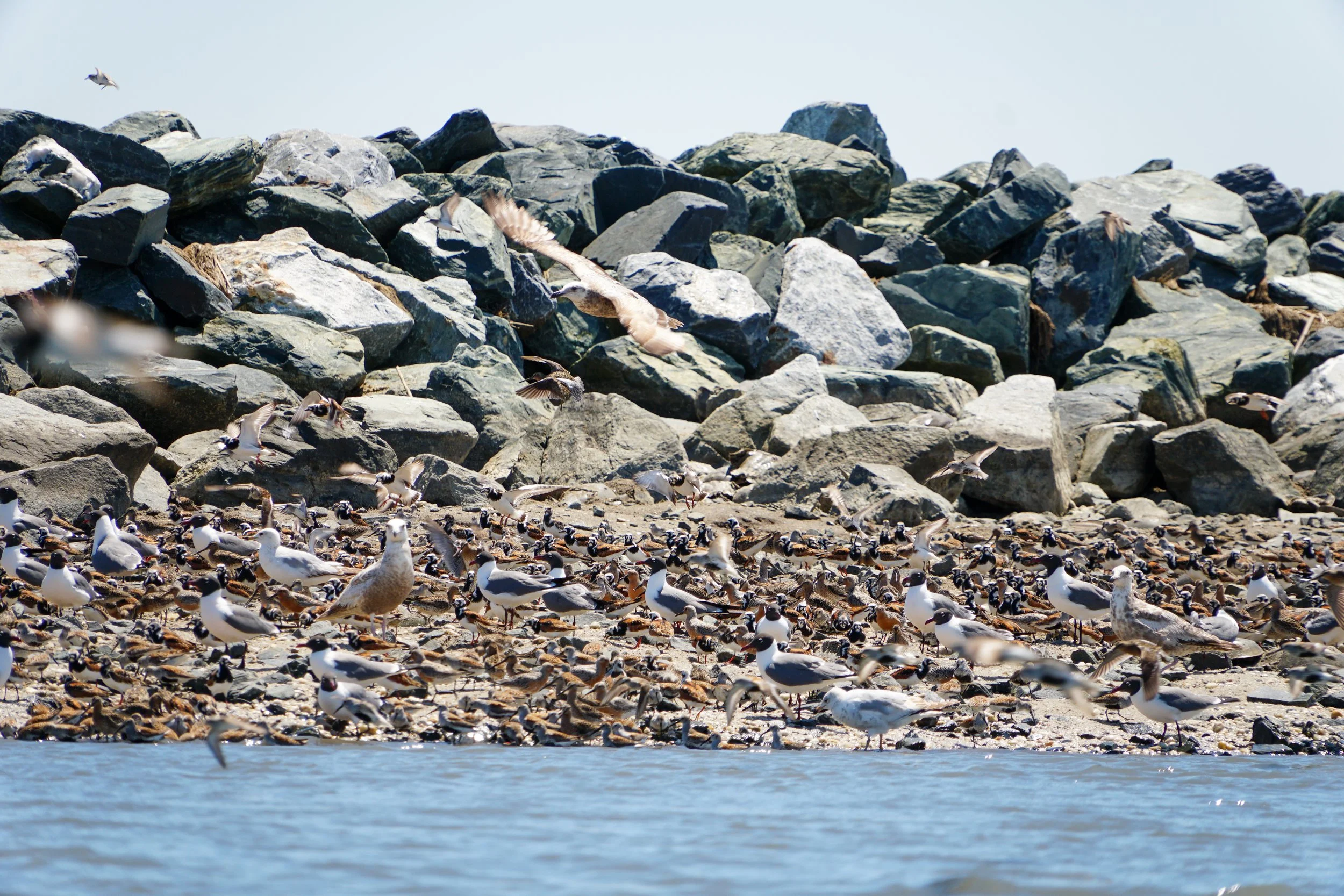
Shorebirds flock together on the beach near the mouth of the Mispillion River - Photo by Olivia Liu
After lunch, we packed up our gear and paddled back toward the boat ramp, working with the current. Along the way, we passed a team of biologists from the Delaware Department of Natural Resources and Environmental Control (DNREC). As we drifted by, we watched them deploy a cannon net and frantically sprint across the sand. They carefully handled the red knots caught under the nets, recording each bird’s weight and physical condition, attaching identification bands to some, and releasing them back into the flock.
DNREC biologists have been monitoring the rufa red knot in Delaware Bay since the 1980s, collecting the long-term data that has been essential to understanding the species’ decline, tracking its recovery, discovering that the Delaware Bay was a critical stopover, and informing conservation efforts.
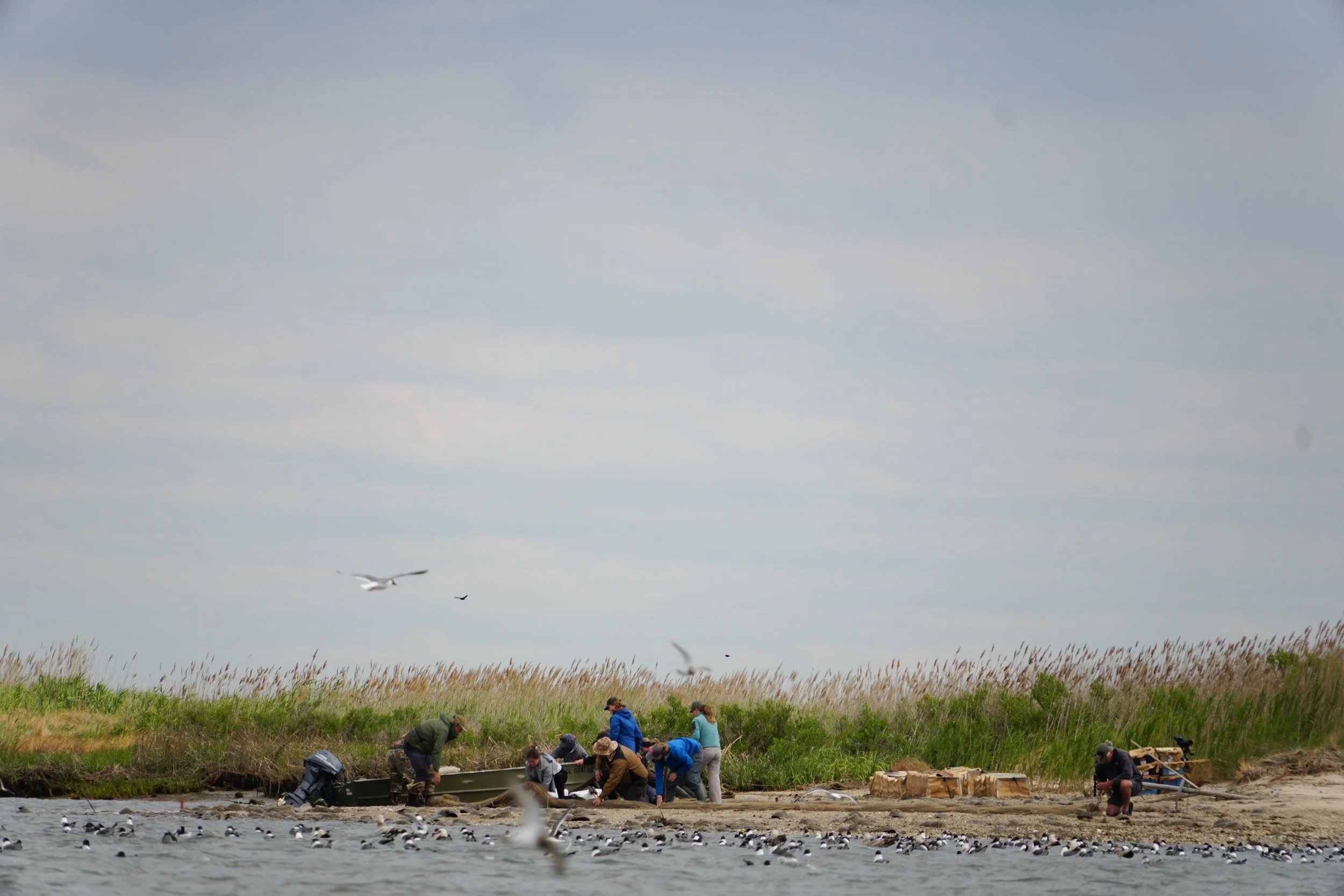
DNREC biologists tag and weigh red knots - Photo by Olivia Liu
As evening approached, the UA team headed to the beach to prepare for a conservation panel on horseshoe crabs and red knots. We were honored to welcome an exceptional group of speakers: Robin Tyler, former marine biologist and limnologist with DNREC; Dave Saveikis, former Director of the Delaware Division of Fish & Wildlife; and Andrew Bowman, President and CEO of Defenders of Wildlife. Together, they brought decades of experiences spanning state wildlife management and nonprofit conservation/advocacy.
The conversation offered a rare opportunity to explore these conservation challenges from multiple perspectives. Our panelists discussed the complex threats facing horseshoe crabs and migratory shorebirds - from habit loss, overharvesting, to the growing impacts of climate change - while highlighting the partnerships and commitment needed to protect one of the world’s most remarkable wildlife migrations.
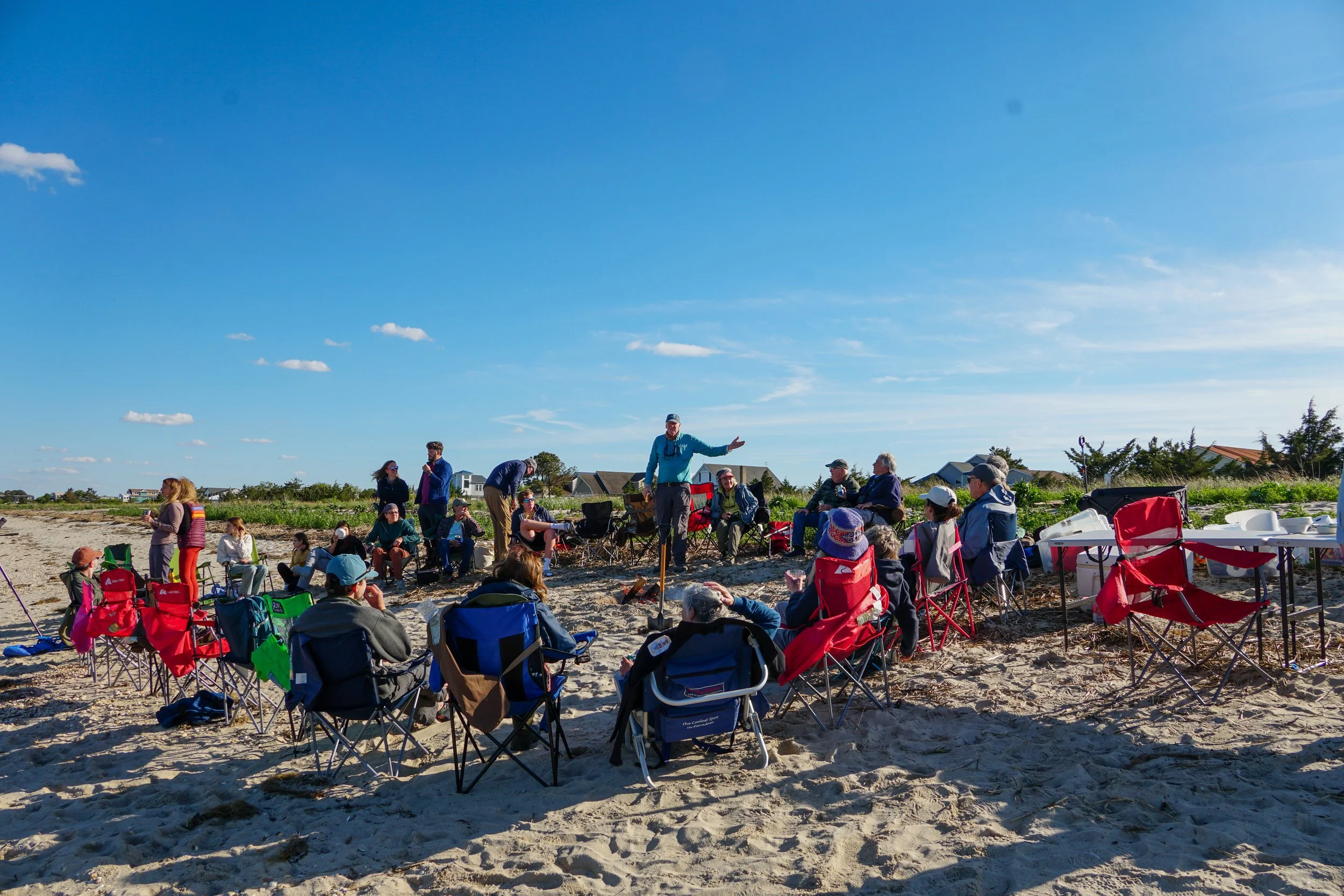
Horseshoe crab and red knot conservation panel - Photo by Olivia Liu
As the wind eased, the bug nets came out, and we settled in for a crab cake dinner while the sky transformed into brilliant shades of pink and purple over the Delaware Bay. With the rising tide, came the night’s main event: one by one, horseshoe crabs emerged from the water and slowly crawled onto the beach to spawn.
Soon after, Trevor Metz, Delaware Technician for American Littoral Society (ALS), joined us to teach our eager participants, whose ages ranged from elementary school to retirement, how to tag horseshoe crabs. Before anyone picked up a tag, Trevor shared about horseshoe crab biology, behavior, life cycle, and why ALS tags crabs and monitors their populations. By the time tagging commenced, participants understood how their efforts contribute to the long-term conservation of one of Delaware Bay’s most iconic species.
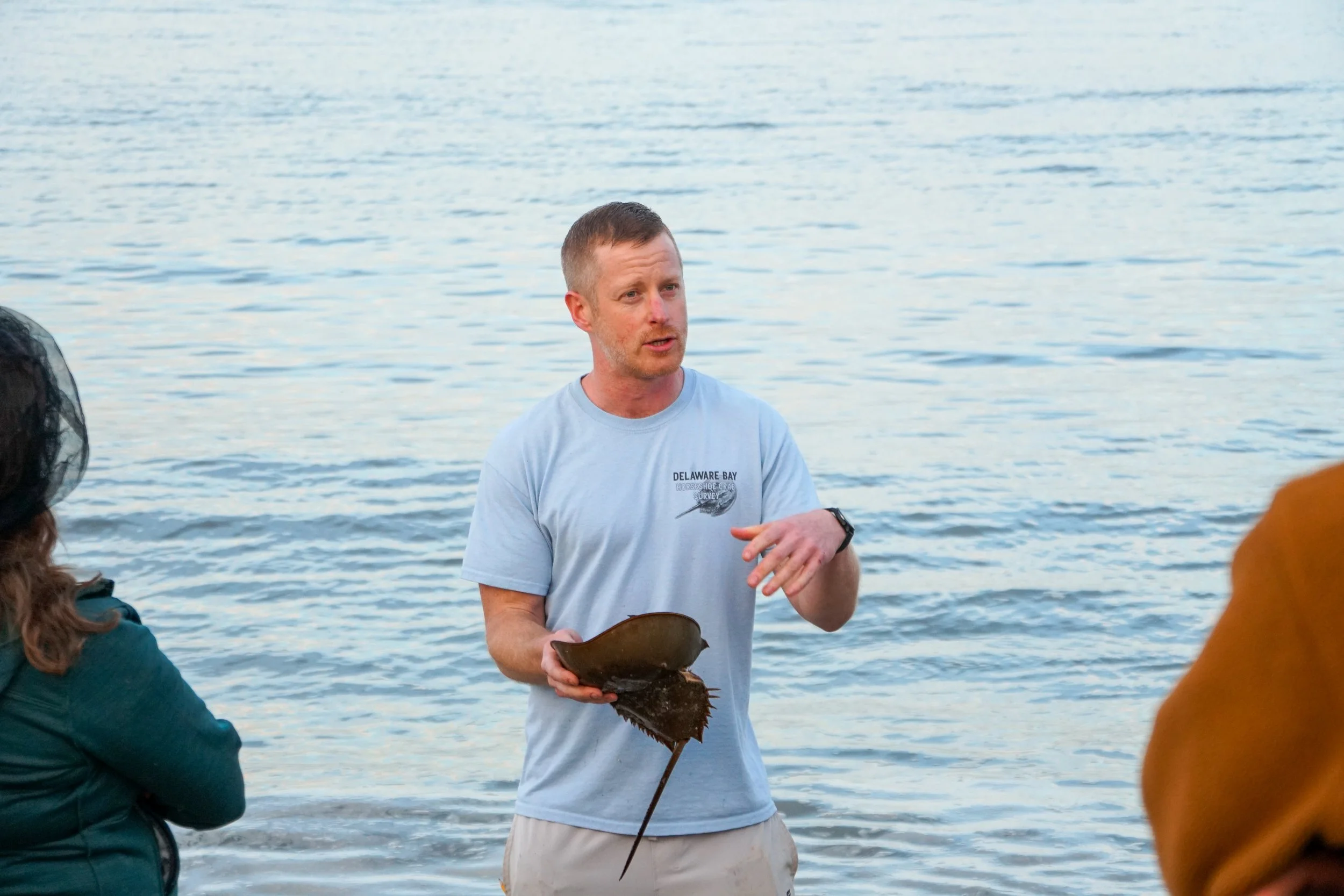
Trevor Metz discussing the biology and behavior of horseshoe crabs - Photo by Olivia Liu
The next morning UA split off, with some staff taking a group to Prime Hook National Wildlife Refuge to observe spring migratory birds, while the rest headed over to the Slaughter Beach Pavilion to conclude the weekend with our third annual Red Knot Fest. Together with our conservation partners, we welcomed families, birders, and community members to the event with guided bird walks, educational exhibits, fish seining and identification, arts and crafts and so much more. Red Knot Fest gave us all the opportunity to share and celebrate the unique relationship between the red knot and horseshoe crabs, and educate the public on the importance of protecting these species.
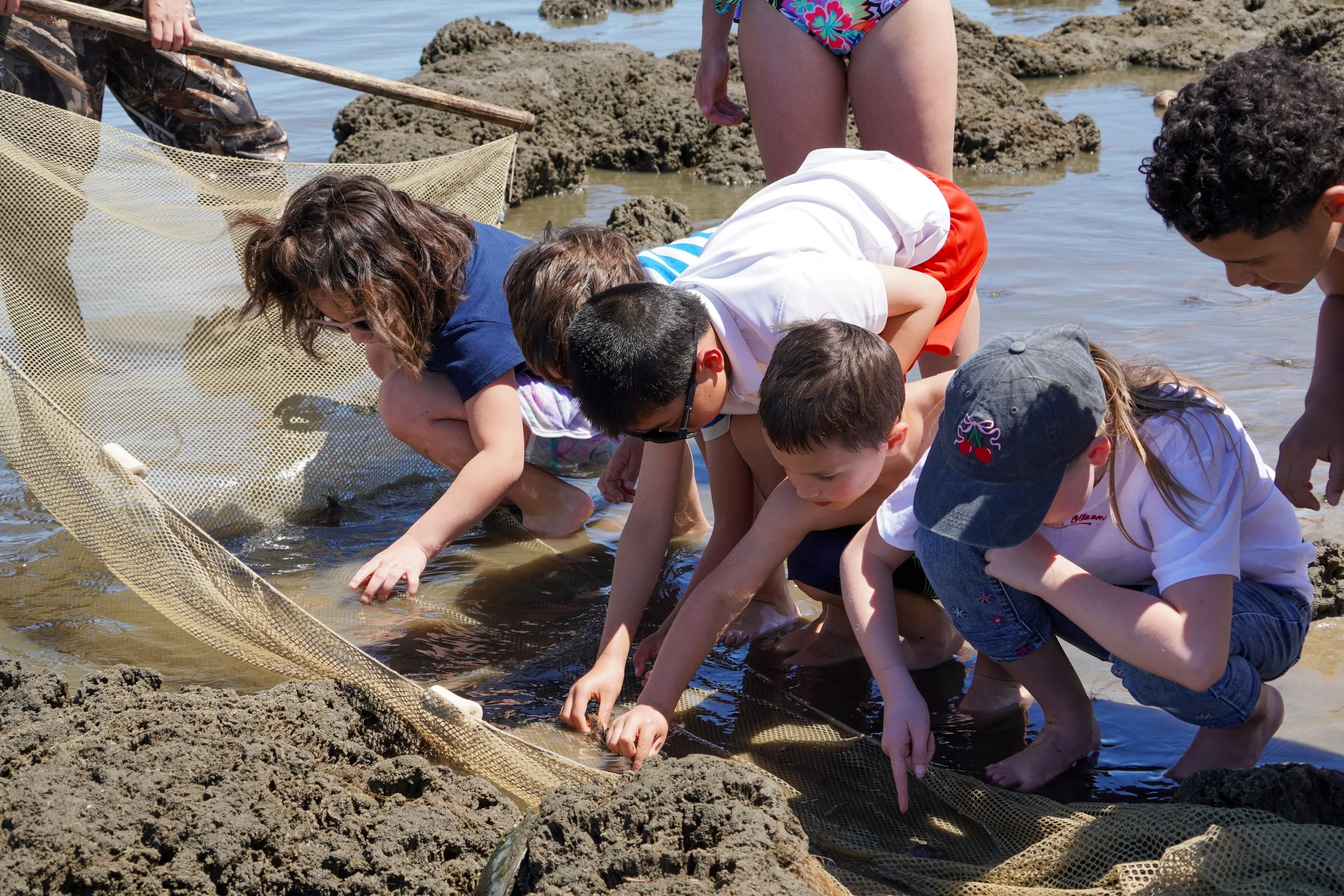
Children identify organisms caught in the seine net at Red Knot Fest - Photo by Janet Harrison
These expeditions are about far more than kayaking and birdwatching. They are designed to create experiences that spark curiosity, connection, and inspiration in people. Two women in our group signed up for the expedition and neither of them had kayaked before. One of them was there simply as a birthday present for her friend, who wanted to see her first red knot.
From my perspective, trips like these make conservation stop feeling like an abstract concept and start feeling personal. And when people form that personal connection, they are far more likely to become advocates for the natural world and the species that depend on it.